

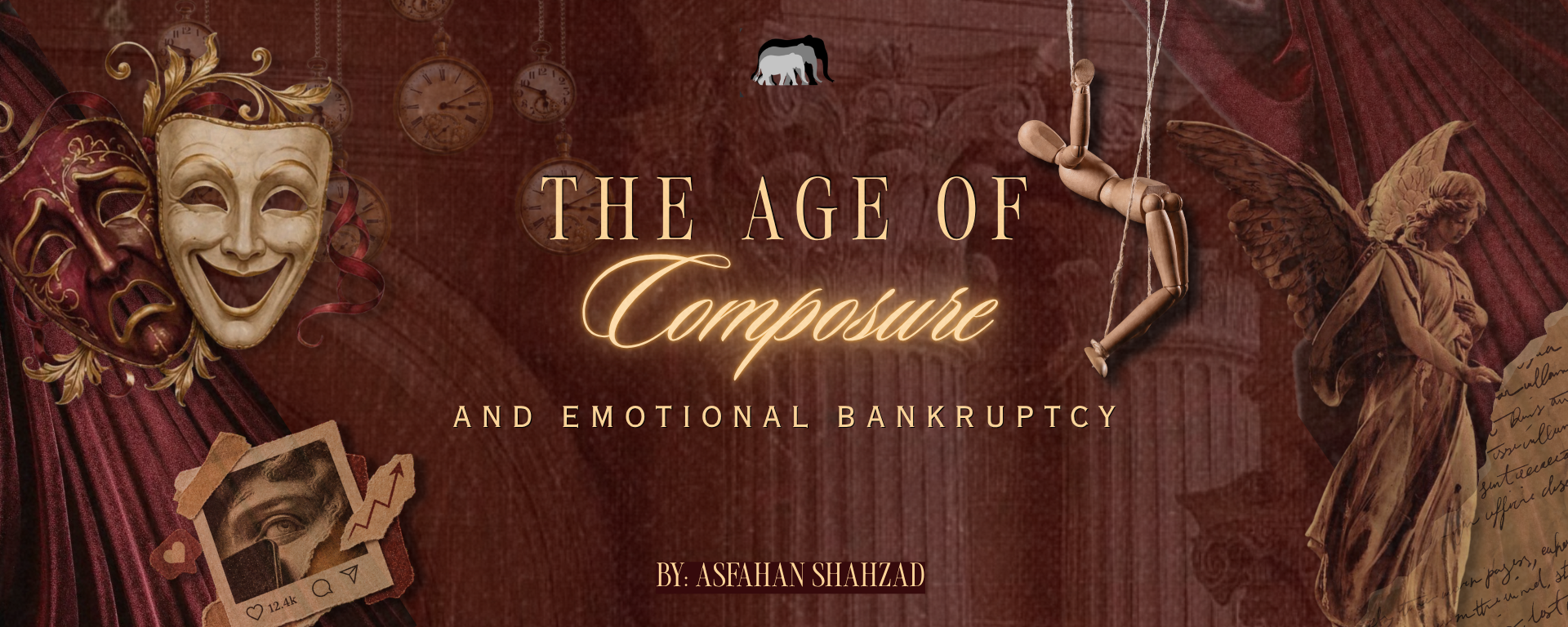
Modern society has traded genuine human connection for a detached, trend-following persona that masks our true feelings under the guise of self-preservation. Long forgotten in the tales of humanity’s story, we have begun expressing ourselves through recycled memes, detached irony, and what people colloquially call being “nonchalant,” rather than through raw, unfiltered feeling. We are all trying to fit in to such an extent that we have forgotten what it means to be called human—a sculpture crafted not from the epitome of unwavering composure, but by our very capacity for vulnerability, empathy, and genuine emotion. We were never meant to act like unfeeling machines; if so, there would be no point to life, nature, or human evolution, which relied on shared emotion to drive connection, intuition, and survival.
For me, someone boldly expressing themselves is the purest proof of having a soul. Why must we always cower behind this subtle veil we have erected? The fear of “what people might think” has grown bolder than the lingering regrets we might accumulate when our story flashes before us and our eyes dim down. We intentionally adopt a detached, indifferent persona because we fear looking “too eager” or fragile, suppressing affection, holding back genuine compliments, and hiding how deeply someone matters to us. When our final moments arrive, we will not care about the awkward interactions we successfully navigated or the cool composure we maintained; we will only regret hiding the authentic self that was capable of truly feeling and living.
Digital platforms weaponize social anxiety by systematically branding raw enthusiasm and vulnerability as “cringe.” As C.S. Lewis notably documented, “We are all sinners, but we are prone to judge others for sinning differently than we do.” In the contemporary landscape, this moral hypocrisy has become algorithmically amplified. Digital platforms thrive on user retention and active engagement, and because mockery, outrage, and public judgment generate the highest click-through rates, apps like Instagram, TikTok, and X naturally push content that polices emotional expression. Showing a hint of genuine sadness, unbridled euphoria, or intense passion for a hobby is quickly met with ridicule, branding the individual with a digital label that feels permanent.
This weaponized mockery forces users into a state of perpetual self-policing, turning raw sincerity into something that feels dangerous and socially fatal. People resort to mocking others as a shield to protect themselves from their own deep-seated fear of being judged. When uninhibited joy is labelled as a weakness, the digital public square transforms into an oppressive panopticon where silence and ironic detachment become the default survival strategy.
Capitalist systems and digital media corporations profit directly by manufacturing human inadequacy and exploiting this climate of fear. By rewarding scrupulously curated perfection—flawlessly color-graded photos, idealized morning routines, and hyper-polished digital personas—they intentionally create a vast identity gap between who we naturally are and who we feel we must become to avoid social exile. To bridge this manufactured gap, industries sell us the solution: curated aesthetic lifestyles, fast-fashion trends, luxury accessories, and constantly shifting micro-identity templates. We are coaxed into buying specific wardrobe aesthetics, consumer goods, and lifestyle products just to project an image of effortless perfection that shields us from mockery. In doing so, emotional suppression turns us into passive consumers seeking external validation through purchased appearances, rather than active human beings finding internal fulfillment through genuine, unscripted relationships. The market capitalizes on our collective terror of being seen as “too much,” transforming our suppressed emotions into a lucrative engine of endless consumption.
This emotional detachment does not happen overnight; it is a gradual erosion that begins the moment we trade childhood wonder for conditional social acceptance. As children, we express joy without reservation, cry openly when we are hurt, and love without the paralysing fear of reciprocity. Yet as time passes, the weight of growing up forces us to construct protective masks. We look back at our younger selves with a quiet nostalgia, longing for the unburdened freedom we once possessed—wishing for those wings to grow back that are now plucked while we remain caged in social expectations. Beyond mere screen-bound trends, this emotional suppression is bred into us through deep-rooted institutional scripts under the guise of “raising a child to be strong for the future.” We repeatedly enforce rigid scripts telling boys that showing emotion or crying is a shameful sign of weakness, while telling girls that their primary worth lies in silent emotional endurance and pleasing others. Instead of giving developing minds room to breathe and navigate their inner worlds, society suffocates them under rigid expectations, teaching them to view their feelings as liabilities. By linking these childhood expectations directly to modern social survival, we mold youth into adults who are complete strangers to their own feelings, unable to process or articulate what happens inside them.
Breaking out of this destructive cycle requires us to fundamentally rethink how we value human experience, recognizing that vulnerability is not a flaw, but our greatest source of strength. Our frailty, susceptibility, and capacity for deep feeling are the very elements that define our humanity, not defects that need to be hidden behind layers of nonchalance, curated feeds, or dismissive memes. When we suppress our core emotional reality to conform to algorithmic metrics or societal demands, we surrender the very essence of living. We become hollow observers of our own lives, driven by a fear that isolates us from the very connections we desperately crave. Society may coerce us to stay quiet, controlled, and emotionally inert, but choosing to dismantle those barriers is a necessary rebellion. In a world that constantly demands curated conformity and cynical distance, choosing to feel deeply, express openly, and exist authentically as we are is the consummate act of courage.
Asfahan Shahzad
Team Writer (2026-2027)
