

There comes a point during most people’s adolescence where they stumble upon works of art so representative of their own emotions that, if allowed to ruminate, provoke a sense of nearly visceral connection. Although many argue that these elements of relatability are often deliberately manufactured for the purposes of mass consumption, our feelings of kinship towards a certain album, movie, or painting carry a sincerity that cannot be rooted in spuriousness. The real sentiments that fuel creative processes—the story behind why art is brought into fruition—are essential to our understanding of how artistry functions.
With the exception of nature, human relationships have long been the greatest driving force behind artistic creation; if nothing else, art has served as a vehicle for expressing both the incredibly simple and highly complex aspects of love, hate, and all that exists in between. That being said, it is essential for us to observe that the resultant dynamic is one highly distinct from its place of origin.
In The Death of the Author (1967), Roland Barthes argues “The birth of the Reader must be at the cost of the death of the Author.” The point here being, once a work enters the world, it ceases to belong solely to its creator; the artist’s interpretation is open for his audience to reinterpret for centuries after his original passions have died down. However, as a muse, you find yourself reduced to an aspect of your identity from a specific period of time, not only retold through the lens of someone else and their emotionally driven point of view, but eternalized as that very rendition. Therefore, the reader’s birth does not simply necessitate the death of the author, but begs the imprisonment of his inspiration.
Love and obsession often draw a finer line than most people bring themselves to accept, and it’s unsurprising that these compulsions demand form. After a relationship ends, or when it reaches its greatest ferocity, the need to create becomes indicative of the far greater urge to preserve. However, preservation understandably lacks input; you’re never going to ask the person you wrote a ballad on whether they approve of the lyrics. This may be attributed to the fact that, besides demanding incredible vulnerability in its processes, the emotional intensity fuelling this genre of creativity does not harbor enough space for anyone except the artist to freely convey their thoughts. The frame of mind required to pour your heart out denies a dilutive, contortive coexistence with its perceived cause. Additionally, a sound, mature comprehension of events is unlikely to ever be a priority for someone whose primary objective is to relieve the burden of their feelings, and by the end of it, this sequence is prone to manifesting as misrepresentation–like one-sided footnotes on a group project–leaving behind truths untold and reputations permanently altered.
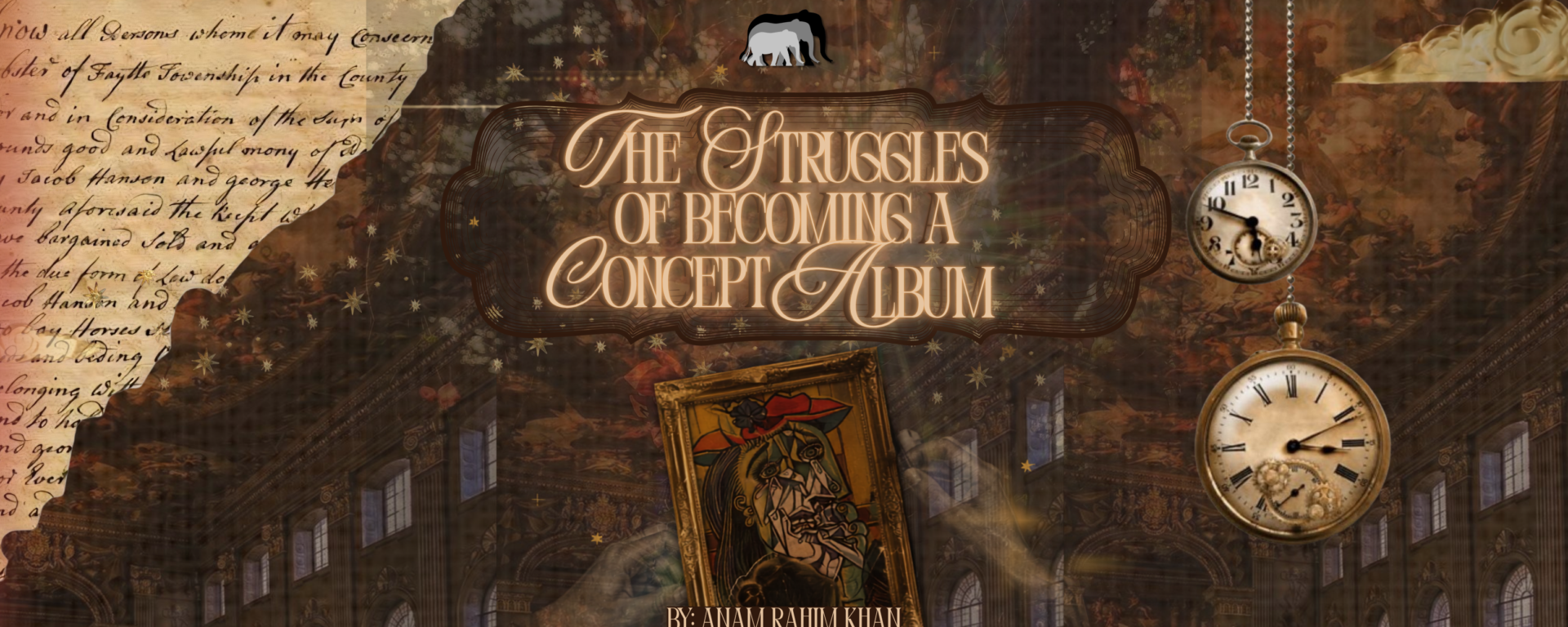
Pablo Picasso’s entanglement with Dora Maar, materializing as the Weeping Woman paintings, illustrates this angle perfectly. His works exist to commemorate the immense horror and grief which ensued as a result of the bombing of Guernica on the 26th of April 1937, amidst the Spanish Civil War. It was a theme Picasso obsessed over with great focus in an attempt to convey his personal torment through Maar’s cubified face of ardent agony. Throughout the course of their time together, the artist would depict his mistress in tears over countless renditions of the weeping woman; the distorted proportions and exaggerated sorrow transforming from stylistic decisions into unwipeable stains on Maar’s true identity. Ironically, despite being a surrealistic photographer and accomplished artist in her own right, she was reduced to, and therefore primarily associated with, both the artwork created of her and the projection of Picasso’s individual sensitivities–as opposed to her own accomplishments. Notwithstanding her publicly expressed dislike of the paintings, “All [Picasso’s] portraits of me are lies. They’re Picasso’s. Not one is Dora Maar,” the question of whether she truly personified these qualities of sadness and anxiety is rendered irrelevant, because they are all she is allowed to be.
Maar’s reaction to the weeping woman begs us to challenge the idea of confining consciousness; is it ever truly possible, or ethically permissible, to capture the essence of an autonomous, multidimensional being within the physical confines of our abilities? Even whilst considering the instances of accurate portrayal, we must acknowledge that human beings are capable of, if not embody, evolution. The same characteristic can not apply to art, which is immutable in nature, and completes what it represents.
Jean-Paul Sartre pivots our conversation from representation to personhood. Unlike items or concepts that exist in an objective sense, such as paintings or audio files, another consciousness can never be fully understood. You may look at trees or houses and make them objects of your subjective reality, but observing another person invites a phenomenon completely beyond the realm of your control; they stare back at you. The Other is irreducible; they cannot be boiled down to a purely physical entity or the product of someone else’s imagination. You cannot make them conform to your will, simply because they possess their own. Sartre stresses the idea that human beings are separate centers of experience, and there will always be more to them than any perception could gauge–yet art’s permanence leads us to mistake this perception as a stand in for its subject. Although a person will constantly exceed our attempts to define them, here we see them tied down to static depictions.
Following the release of Will Toledo’s Twin Fantasy (2011), Cate Wurtz jokes: “…don’t become a muse. don’t become a concept album.” Although having an album be written about you is reasonable cause for discomfort, the two were eventually able to make peace and work together on future projects–an occurrence which may have been rendered inconceivable if not for the nature of Toledo’s project. The album centres around Wurtz and the end of their relationship, and yet, the only consciousness Toledo is able to confine is his own. Twin Fantasy recognises the impossibility of defining another person; it doesn’t seek to frame and conclude Wurtz’s existence, but understands the gap between Toledo’s comprehension of their relationship and the reality of it being a “fantasy”. Loving the “unreal” serves as a major focal point of the piece; a fundamental disconnect lies between the idealized, self-constructed image of Toledo’s muse and the actuality of her being a person capable of change and defiance. Seeing someone you love through a mirror of yourself, mistaking this falsehood for truth; this is precisely where Sartre’s problem arises, yet, crucially, it stands acknowledged. Despite several references to Wurtz and her own artistic creation, Twin Fantasy concludes as a contradiction: it revolves around one, only to express the failures of the other.
All this being said, we inevitably arrive at the conclusion that art is problematic. Not every work possesses self-awareness, and not every person is able to reconcile with the idea of becoming a motif. However, it would be untrue, and disagreeable, to say that this issue makes art unworthy of existence. For although turning someone into a concept album is an attempt at making them coherent by condensing their complexities, we must see it as just that–an attempt.
Anam Rahim Khan
Editor-in-Chief (2026-2027)
